



How many times a day do you milk, and what is your current herd average, butterfat and protein? We milk twice a day. Our herd average is 29,165 pounds of milk, 1,231 pounds of butterfat and 943 pounds of protein.
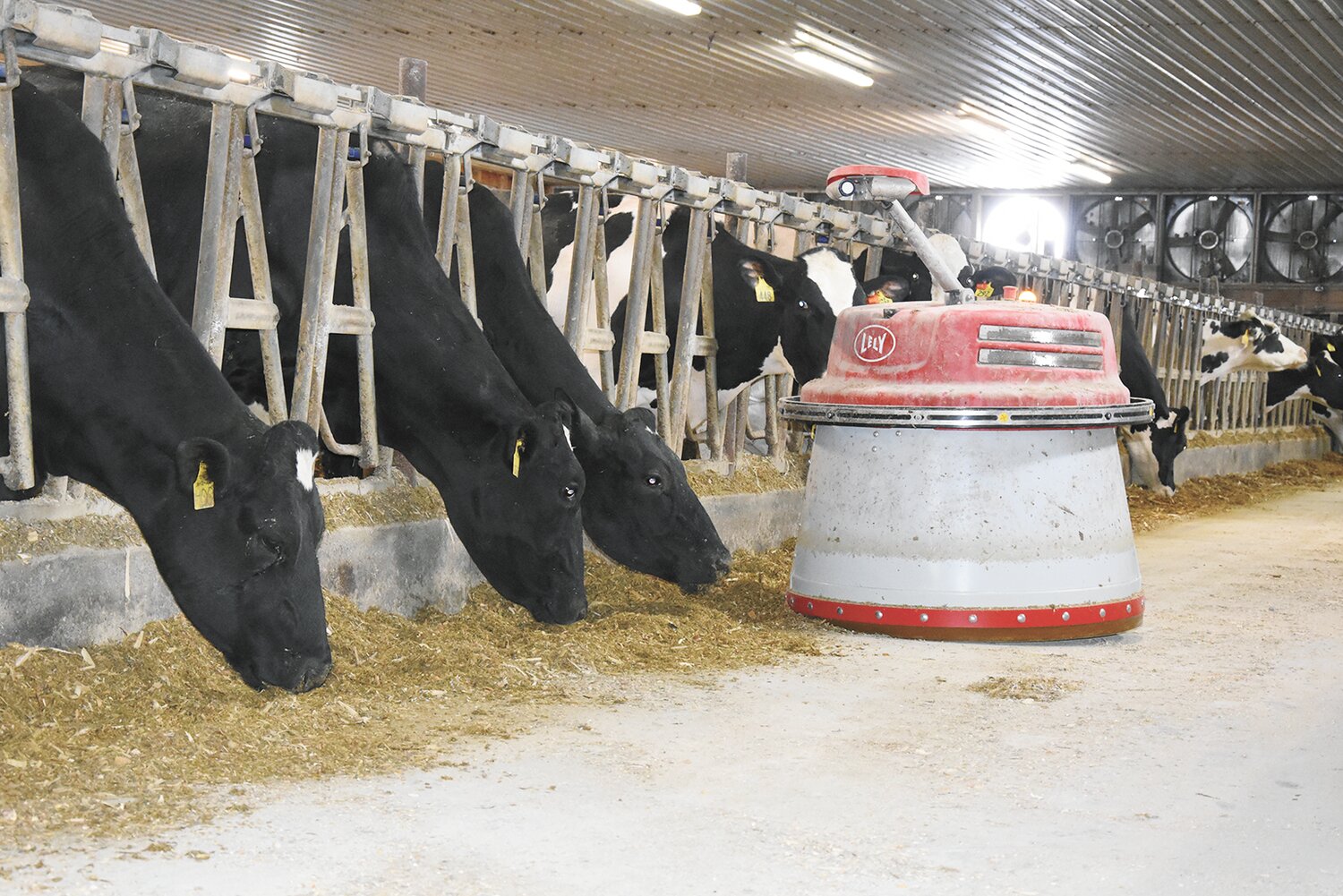
Describe your housing and milking facility. We have a tunnel-ventilated freestall barn with foam mats that have a water cover over the top. Cows are milked in a double-13 parallel parlor.
Who is part of your farm team, and what are their roles? My wife and I, our children and two part-time employees all work together. My wife and I and our employees do most of the milkings. We try to have two people milking most of the time. My wife and children feed the calves, and I feed the cows.
What is your herd health program? We do herd checks every two weeks, with females 27-41 days bred check for pregnancy using ultrasound. All pregnant cows under 30 days are rechecked four weeks later. Then, all pregnant cows are rechecked 70-100 days pregnant with a Dairy Herd Improvemtn Association milk sample. Cows are vaccinated every lactation, 3-7 weeks after calving.
What does your dry cow and transition program consist of? Dry cows are dried off at 67 days. We put them on a slow-down program where we feed them dry cow feed and milk them a couple of times over three days prior to dry treating them. They are all on a bedded pack their entire dry period, and that is where they also calve. They are fed fine ground straw, corn silage, haylage, canola and a mineral mix. Transition cows are put on a bedded pack about one week before entering the rest of the herd.
What is your average for days in milk? 163 days.
What percentage of your herd is in their first lactation? 38%
What is the composition of your ration, and how has that changed in recent years? Milk cows are fed corn silage, haylage, earlage, beet pulp, canola, nevameal, ground corn, roasted beans and a mineral mix. The beet pulp is new for this fall; we blended it in with the corn silage when we were chopping, so we will see how that works.
Tell us about the forages you plant and detail your harvest strategies. We plant dual-purpose corn for silage. We plant alfalfa that has good forage quality. We are very aggressive with our corn silage processing. All kernels must be cracked; we aim for 63%-65% moisture on corn silage. We grind earlage as fine as possible, aiming for 40% moisture. We chop all our alfalfa for haylage, aiming for 55%-60% moisture. All forages are stored on piles, covered with plastic and covered solid with tire sidewalls.
What is your average somatic cell count and how does that affect your production? We average around 200,000 somatic cell count.
What change has created the biggest improvement in your herd average? We haven’t done anything to major to change our production. It has gone up a little but not a lot since we started milking seven years ago.
What technology do you use to monitor your herd? We installed CowManager one month ago.
What is your breeding program, and what role does genetics play in your production level? Cows are bred on timed A.I., using an ovsynch program with double Lutalyse. We breed about half of the cows to beef and half to Holstein. Generally, younger cows are bred to Holstein. My goal is to breed more cows off natural heats since we installed CowManager. Heifers are bred to sexed semen the first two services, then conventional after that. Those are tail-chalked and bred by an A.I. technician off site. They will also be getting switched to CowManager. Genetics have brought our components a long way in the last five years, and we watch very closely when picking what bulls to use.
List three management strategies that have helped you attain your production and component level. It doesn’t stop with three things, but forage quality, cow comfort and consistency in everything will go a long way.
Tell us about your farm and your plans for the dairy in the next year. I farm with my wife, and God has blessed us with five healthy children. We farm about 300 acres of corn, alfalfa and soybeans and feed out most of our steers. We do not have a lot planned for the next year. We may try some sexed semen on some cows and breed more to beef bulls.
 |
 |
 |
 |
Share with others


Comments
No comments on this item Please log in to comment by clicking here