


Did you know that the navel of the calf is connected to the liver and bladder when the calf is born? While the calf is in utero, the umbilical cord supplies the fetus with oxygen and nutrients. It also removes waste via the umbilical vein, two umbilical arteries and the urachus. After the calf is born, the normal process is for these structures to regress and become very small ligaments. Because the navel is directly connected with blood flow and two major organs, it is important to provide proper navel care.
The normal regression of the navel after birth should be for the navel to become dry and shriveled within 3-5 days. By approximately 1 week, the navel remnant is often no thicker than the size of your thumb. There should be no swelling, pain or discharge when palpated.
How should you care for the navels of newborn calves? First, keep that maternity pen clean and dry. In my experience, good quality straw appears to be the best material for newborns. However, I have also seen shavings be successful. While cornstalks are another option, they get wet and dirty faster than straw and shavings because their absorption is not as good.
Next, disinfect the navel as soon as possible after birth; I recommend this procedure for both beef calves and dairy calves. Use a disposable cup to dip each navel up to the level of the body wall. It’s not necessary to disinfect a large amount of the body wall, but you should include the area immediately surrounding the navel.
If you are reusing the cup, make sure to clean and sanitize that cup several times a week. I recall one scenario where a farm was experiencing high mortality in calves during the first 7 days of life, despite total protein scores meeting the gold standard. When we investigated the maternity pen, the two teat dip cups used for navel dipping were caked with manure and bedding. We were able to grow large amounts of bacteria from the dip in the cups.
I also see some farms spraying navels with iodine instead of dipping, but it does not appear as effective as dipping; I observe more navel infections in those farms.
What products should be used to dip? I strongly recommend that all farms use 7% iodine. Iodine teat disinfectants will not be appropriate or strong enough to cause drying. There is another product on the market, Navel-Guard, that has research that shows it is non-inferior, or equal to iodine in performance. It may be an alternative if it is not possible to source 7% iodine.
How many times should you dip? Navels should be dipped a minimum of one time. It can be helpful to dip a second time to ensure complete coverage and drying, especially if you have maternity pen challenges or protocol compliance issues.
What are the consequences of navel infections? The infection often penetrates into the abdomen along the vessels going to the bladder and liver. Most commonly, I see joint infections in these calves because of the bacteria entering the bloodstream. These cases are difficult to treat and often result in euthanasia or a cull heifer. I imagine those who recover have lower average daily gains as well, but I have not measured this. Infected navels can also become very large pockets of infection, or abscesses, that are difficult to treat with antibiotics and permanently remain. Occasionally, navel infections can also result in umbilical hernias, where the body wall fails to close and parts of the bowel can be found in sac outside of the body wall. For umbilical hernias to resolve, any infection should be resolved before attempting surgical or medical repair of the hernia.
Should you routinely screen for umbilical infections? In my opinion, it depends. If it can be added into your workflow, I would check navels at least once in the first 7 days of life. If your heifers are being transported to a calf grower early in life, I would check the navel of every calf before transport. If your farm has a high incidence of navel infections, you might ask your calf grower to also check navels if your calves leave before 7 days of age.
How many navel infections are too many? The literature is inconsistent. Some articles report up to 20% of calves having navel infections with aggressive monitoring. If I were to pick a number (assuming you are checking all navels once in the first 7 days of life), I would investigate my maternity pen and newborn protocols if more than 5-6% of calves had infections. With some vigilance, clean maternity pens and navel dipping, you can prevent a costly neonatal disease right at birth.
References:
businesswales.gov.wales/farmingconnect/news-and-events/technical-articles/navel-pathway-disease-after-birth-managing-livestock-disease-improve-welfare-and-production
livestock.extension.wisc.edu/articles/navel-care-for-beef-x-dairy-calves/
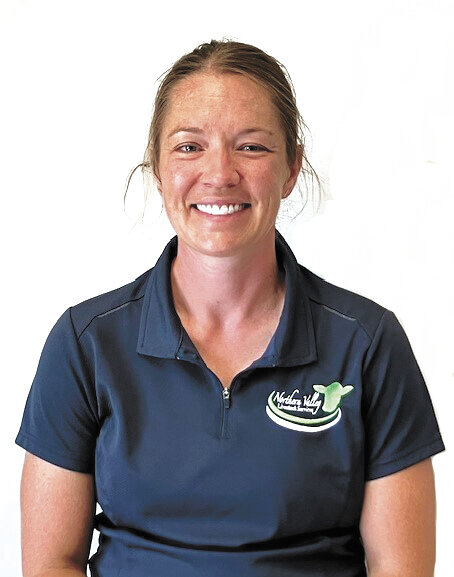
Megan Weisenbeck is one of five veterinarians at Northern Valley Livestock Services in Plainview, Minnesota. She practices primarily dairy production medicine in Minnesota and Wisconsin. Megan can be reached at meganweisenbeck.dvm@gmail.com.
 |
 |
 |
 |
Share with others


Comments
No comments on this item Please log in to comment by clicking here