


STEPHENSON, Mich. — For more than 40 years, David Granskog has approached breeding decisions from a unique perspective. Focused on selecting for reproduction — specifically a 12-month calving interval — David’s main selection criteria are Productive Life and Daughter Pregnancy Rate.
“The 12-month calving interval is the most important trait,” David said. “Reproduction starts with this. Cows with 12-month calving intervals don’t have any problems at freshening time, and they’re basically trouble-free cows.”
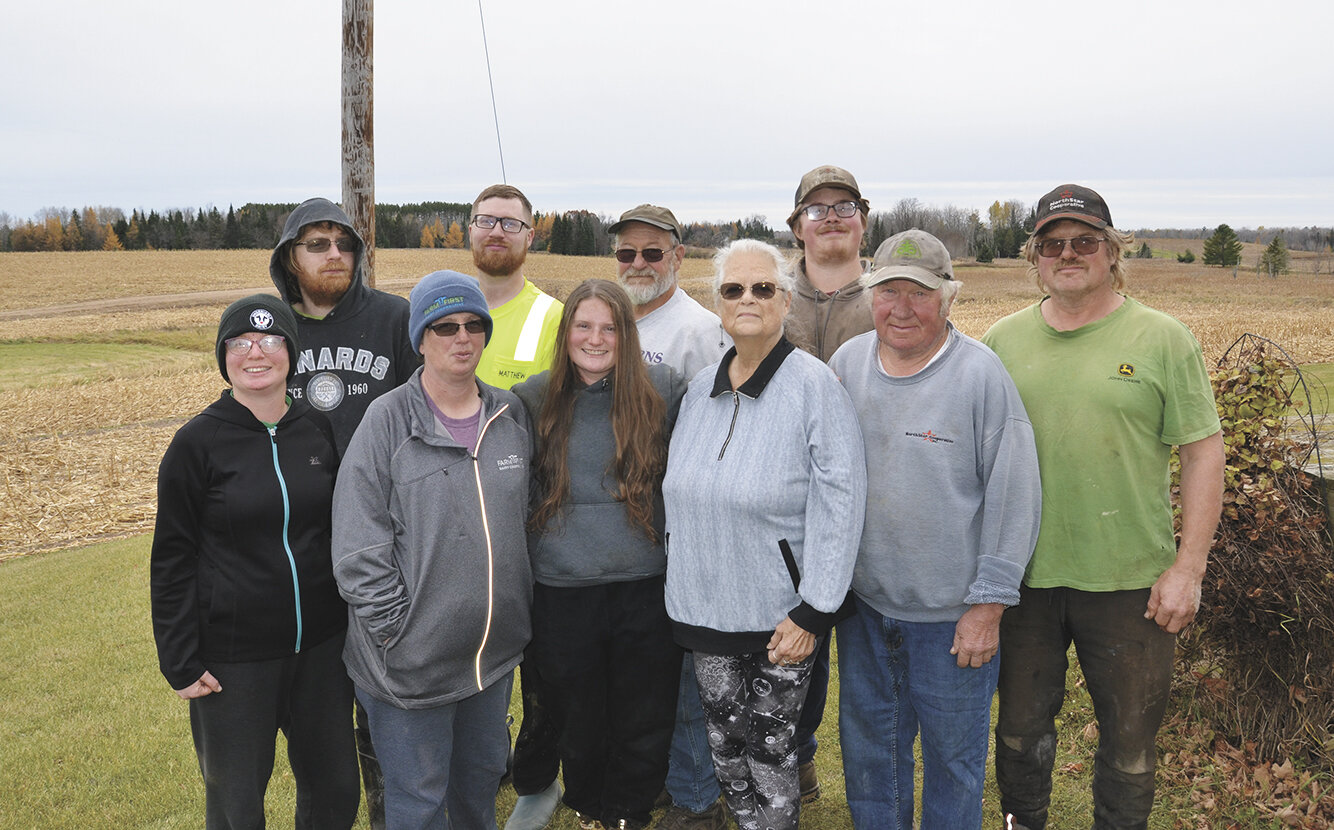
David and his wife, Susan, farm with their son, Henry, and five of Henry’s children: Gabriel, Miranda, Matt, Sadie and Daniel. The Granskogs milk 278 cows and farm about 1,000 acres near Stephenson. Cows are milked three times a day in a triple-6 parlor.
The Granskogs’ registered Holstein herd is 100% homebred, and all cattle are genomically tested. The Granskogs have received the Progressive Genetics Herd award from Holstein Association USA Inc. for the last 20 years.
“I’m a big proponent of registered cattle,” David said. “I’m also a big proponent of pedigrees. Having registered cattle and working with the Holstein Association and using the Holstein Red Book gives you a lot of opportunities to make intelligent and competitive decisions.”
David said their selection criteria are different from many other breeders.
“We use the same bulls, but we’re using them differently,” he said. “We’re focusing on profitability. Production and type are both important. We have Very Good cows, but no Excellents. The number of pounds of milk in the tank every day is extremely important. We use high-milk bulls and bulls with high DPR and Productive Life.”
Wellness traits and longevity are priorities for the Granskogs when selecting bulls. The Granskogs look for bulls that come from cows that have had a 12-month calving interval for at least 5-6 years. David said these cows possess health traits that increase immunity.
“We want cows to live a long time and have calves without having problems,” Susan said.
They look for sires with a genetic evaluation of +4 or +5 for PL and at least +$200 for Wellness Trait Dollars, which focuses on wellness traits such as mastitis, lameness, metritis, ketosis and displaced abomasum.
Matt used to breed cows for CentralStar Cooperative Inc. and does the breeding on his grandparents’ farm.
“By focusing more on wellness traits, we don’t have as many transition problems,” Matt said. “We’ve seen a drastic difference and don’t lose many cows to transition issues anymore.”
David said they also do not treat cows for mastitis.
“We haven’t treated a lactating cow for mastitis in close to 40 years,” he said. “We can have high milk production and low somatic cell count. A lot of that depends on the immune system, which is tied to DPR and Productive Life.”
The Granskogs mostly use proven sires.
“There’s not enough data on genomic bulls,” Matt said. “When you stay towards the proven bulls, they have better numbers.”
David agreed.
“That’s where the pedigrees come in,” he said. “You need a combination of both pedigree and genomics to make intelligent decisions.”
The Granskogs have maintained a rolling herd average between 29,000-30,000 pounds of milk for the last seven years.
Currently, their RHA is 29,089 pounds of milk, 1,200 pounds of butterfat and 944 pounds of protein. David said their herd average is lower than normal presently due to a large number of fresh heifers they are working into the herd, but their butterfat and protein are increasing. The Granskogs have a cow giving 170 pounds of milk per day and have had cows as high as 200-plus pounds per day.
“(Dairy Herd Improvement Association) records and other records are extremely important in this business,” David said. “We have records on our animals that we can use to make smart decisions. People who have records and registered cattle have an opportunity to be very competitive with large farms.”
A cow named Healthy is a prime example of the type of animal the Granskogs strive to breed. In her fifth lactation, she made 46,802 pounds of milk, 1,797 pounds of butterfat, and 1,428 pounds of protein in 310 days. This Gold Medal Dam scored VG-85 and has three daughters that each average 34,133 pounds of milk, 1,416 pounds of butterfat and 1,078 pounds of protein. Healthy has had a calf nearly every 12 months since her first calving at one year and 10 months of age.
“We flushed her twice this last year,” David said. “Instead of flushing heifers, we’ll flush older cows. Deciding who to flush requires a certain amount of experimenting.”
Healthy was flushed to Tampa and has five calves on the ground. More calves sired by Organic were expected in November.
“We’re breeding to different bulls in order to study the genomics a little bit,” David said. “(Over) 10 years ago, we had one of the Top 10 genomic heifers in the world. The productive Life on that heifer was +10, which is high. Today, she has four heifers in the herd, and two of her daughters are in their 10th lactation.
The Granskogs use SCR collars for heat detection, which have contributed to their reproductive success. They average 1.2 services per conception, and their conception rate is about 50%.
The Granskogs have sent three bulls to A.I. stud. In addition, they have collected semen from a few of their own bulls, which they are using on their farm on an experimental basis.
“You can have everything fall in line and look perfect, but if you don’t have the milk production, that could change a bull’s proof,” David said. “We’re in the process of comparing the genomic data that we collect. It’s not always accurate.”
The Granskogs are in an expansion phase as they grow their heifer herd in anticipation of installing robots in the future. Working the younger generation into the operation is important to David and Susan. As a result, several of their grandchildren are earning a percentage of the milk check.
“It’s going to help them understand the business from a financial standpoint,” David said. “If they want more income, we have to sell a little more milk and be more efficient. Treating kids like employees maybe works in the short term, but in the long term, you need to find ways to work them into the business if you want the farm to continue.”
As they plan for the future, the Granskogs plan to continue to create efficient cows capable of consistent, yearly calving.
“If every acre on a farm is profitable and every cow on a farm is profitable, the farm is going to be very profitable,” David said. “You have to be a low-cost producer in this business and focus on the things that give you a competitive advantage.”
 |
 |
 |
 |
Share with others


Comments
No comments on this item Please log in to comment by clicking here