
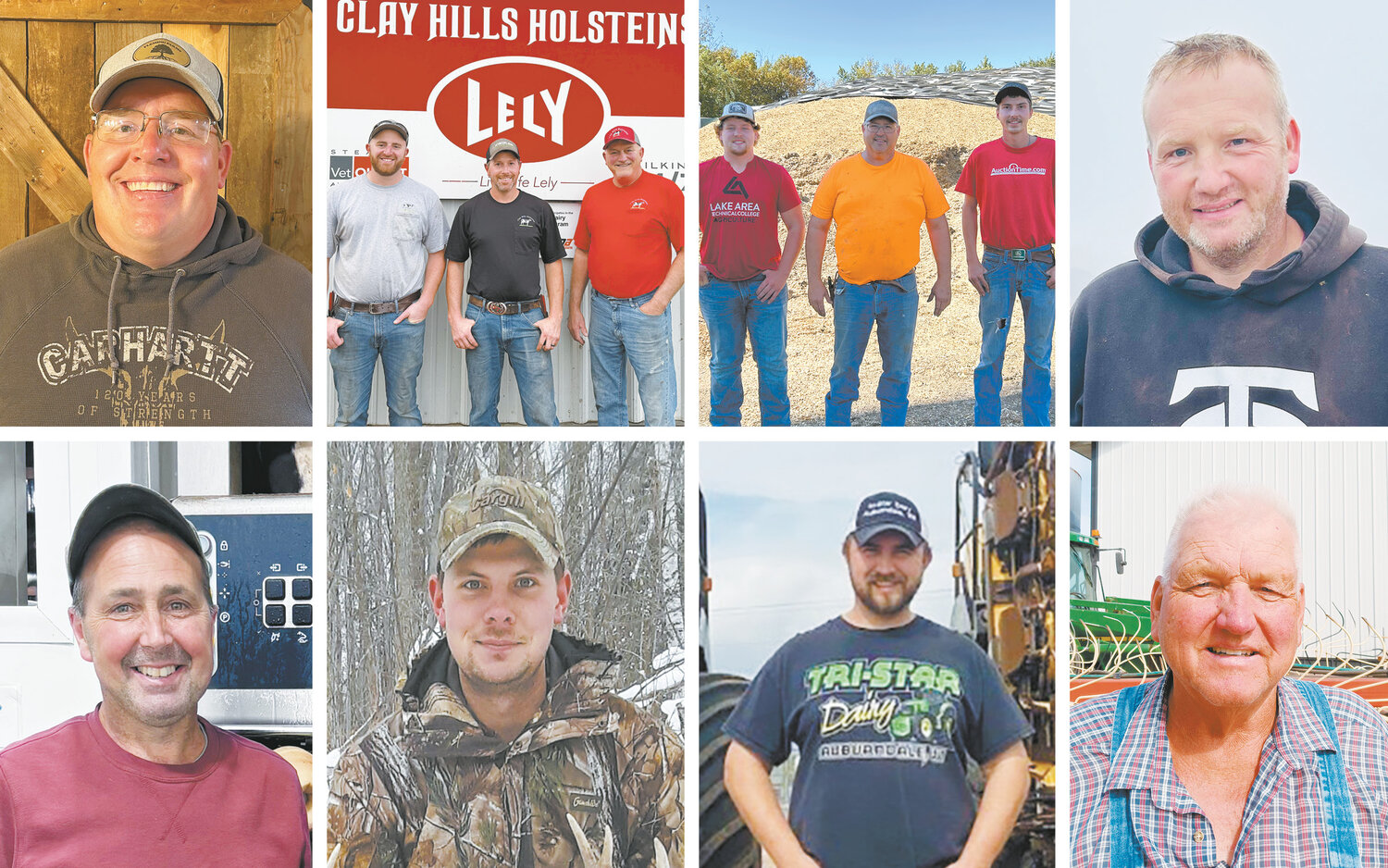
Jerad Fleming
Westby,
Wisconsin
Vernon County
110 cows
Describe corn silage harvest on your farm. We hire a local custom harvester to chop our silage. It is stored in a 20-by-70 stave silo and only takes six hours to fill.
When do you plan to start chopping or when did you start chopping? All our corn is organic and typically not planted until the end of May, so harvest is typically a little later. We plan to start chopping at the end of September.
What are your predictions for this year’s yield, both quantity and quality? It has been an excellent year with a lot of moisture. We predict 20-plus tons per acre. Quality should also be excellent, with all our silage being first-year corn and having good weed control.
What is a management practice you changed in the past that has improved your corn silage? Over the last five years, we have gone to having only one year of corn in our crop rotation. This has improved yields and weed control greatly.
What do you plan to do with your corn fields when you are done chopping? After chopping, all silage fields have manure applied in the fall and are fall tilled. That way, they are prepared for seeding in the spring.
Tell us about a unique memory or day chopping corn silage. In 2006, we were lined up to start chopping the next day with our custom harvesters, and I was in extreme pain. I went to the emergency room that night and had emergency surgery to remove my appendix. The doctors made me spend the night in the hospital, but as soon as I returned home the following day, I went straight to the tractor.
Tell us about your farm. Fleming Farms is located in the rolling hills between Westby and Coon Valley, Wisconsin. I farm with my wife, Stacey, and our four children. The farm consists of 500 organic acres of owned and rented tillable land and 120 acres of pasture. We ship our milk to Westby Co-op Creamery, where I also serve as vice president on the board of directors. My oldest two children, Hallie and Jackson, are both attending college this fall, and my youngest two children, Bennett and Brielle, are in high school at Westby. Stacey teaches kindergarten for the Westby Area School District, and I also help coach varsity boys football.
----------------------------------------------------------------------------------
Kevin, Mike and Steve Klaphake
Clay Hill Holsteins
Freeport, Minnesota
Stearns County
140 Cows
Describe corn silage harvest on your farm. We started chopping Sept. 5 and finished Sept. 6. It took 15 ½ hours to finish. We made a 90- by 280-foot pile. I hauled wagons, while the boys packed the pile. We got rid of our silos years ago.
When do you plan to start chopping or when did you start chopping? We have it custom done by Klaphake Custom Harvesting. We chopped already and got it in at 67% moisture. We aim for 66%-67% moisture each year.
What are your predictions for this year’s yield, both quantity and quality? The quality and quantity were very good. It ran 32 tons per acre.
What is a management practice you changed in the past that has improved your corn silage? Try to pack as much as possible. We pack for an hour to an hour and a half after we are done hauling. We use an 8-wheeled tractor going length-wise to get the best pack we can.
What do you plan to do with your corn fields when you are done chopping? The day after chopping, we tanked our manure and worked it in. We rented tanks and took some out of the pit, then chisel plowed it in right away. We covered 113 acres, and it took us two days.
Tell us about a unique memory or day chopping corn silage. When I had silos, I refilled three silos, leveled them off and then milked 70 cows. It was a long day.
Tell us about your farm. I started farming in 1980 with my dad, and I now farm with my sons, Mike and Kevin. We formed a partnership eight years ago, Clay Hill Holsteins LLC. We farm 480 acres of corn and alfalfa. We ship our milk to First District Association.
----------------------------------------------------------------------------------
Cameron, Chad and Grant Wieneke
Adrian, Minnesota
Nobles County
320 Holstein cows
Describe corn silage harvest on your farm. When we chop corn silage, the whole family helps, including my mom and dad, who are retired. We use a self-propelled chopper, three straight trucks and a wagon. We store the silage in a large bunker and three silos.
When do you plan to start chopping or when did you start chopping? We started filling the bunker Sept. 3 and finished Sept. 7 this year. We took a break to chop our fourth-crop hay, then went back to chopping corn silage. We finished filling the three silos Sept. 15.
What was this year’s yield? Our corn silage produced between 28-30 tons per acre this year.
What is a management practice you changed in the past that has improved your corn silage? We take the time to pack the bunker more precisely and make sure the processor is set properly.
What do you plan to do with your corn fields when you are done chopping? We spread the corn fields with manure from our farm and then till the ground for the end of the season.
Tell us about a unique memory or day chopping corn silage. This year, my son, Grant, and nephew, Cameron, joined the operation, and we were able to fill the bunker in just over three days.
Tell us about your farm. My brother, Kevin, and I farm with our sons, Cameron and Grant, who are the fourth generation. We farm 1,200 acres, finish 900 steers and milk 320 Holstein cows. We ship our milk to Agropur.
----------------------------------------------------------------------------------
Jared Kruger
Wabasha, Minnesota
Wabasha County
300 cows
Describe corn silage harvest on your farm. We store our corn silage on the farm. We make 3-4 piles. Usually my dad, Paul Kruger, runs the 6710 John Deere chopper, and we have several wagons. I have four boys, so the oldest two: Nolan and McCoy, operate wagons, along with my sisters, Amanda and Karen.
When do you plan to start chopping or when did you start chopping? We started chopping on Sept. 11. Corn silage chopping is a long process because I stagger out the maturity of the corn so it is not all ready at the same time. The first corn we harvest is 105-day corn; the second, 108-day; and the final variety is 110-day. We are still chopping, as of Sept. 22. We are about half done. The 110-day corn is not quite ready yet.
What are your predictions for this year’s yield, both quantity and quality? The ears of corn are very girthy. I have not weighed it, but the plant is healthy and I do not have rust. There is a lot of corn out there in the fields.
What is a management practice you changed in the past that has improved your corn silage? We have been trying to get it wetter: the wetter the better. I use silage varieties, but our 108-day corn is a dual purpose because they have started recommending that.
What do you plan to do with your corn fields when you are done chopping? This year, I signed up with the Farm Service Agency to put on a cover crop of rye. I am going to dig the fields, then broadcast rye. In the spring, we will do a combination of harvesting, grazing and terminating.
Tell us about a unique memory or day chopping corn silage. A good day of chopping corn is a day with no breakdowns when you get a lot accomplished. A bad day is when the kernel processor plugs and the reverser on the head does not work.
Tell us about your farm. Me and my wife, Leanne, have been married for 18 years and have four boys: Nolan, McCoy, Conway and Summit. We own half the herd. I farm with my dad and mom, Paul and Mary Jane Kruger. Together we run about 500 acres and milk 300 cows in a swing-22 parabone parlor. We sell our milk to NFO. Two years ago, my father bought the Cresco Livestock Market.
----------------------------------------------------------------------------------
Randy Hutterer
Manitowoc,
Wisconsin
Manitowoc County
65 cows
Describe corn silage harvest on your farm. Corn silage is harvested mostly by my son, Andrew, and me, but we need to have a custom harvester come and open the fields for us. We use a 2-row pull-type chopper and three wagons. We store corn silage in a 16-by-60 silo and also do silage bags — one 9-by-200 and a 9-by-100 if the yield allows for that much to be harvested.
When do you plan to start chopping or when did you start chopping? We are planning to possibly start harvesting the week of Sept. 22, based on plant moisture. We are aiming for moisture levels between 64%-70%.
What are your predictions for this year’s yield, both quantity and quality? I am predicting a good crop this year with some higher starch levels due to the larger cob size. The tonnage should also be higher as the stalks are tall. We had a good growing season with timely rain and hot temperatures.
What is a management practice you changed in the past that has improved your corn silage? This year, we used a custom drone sprayer to apply fungicide. We felt we would have better coverage than your traditional co-op sprayer. This also resulted in no damage to the crop by running over stalks.
What do you plan to do with your corn fields when you are done chopping? We are planning to plant a cover crop of an oats and radish mixture and then plan to spread manure on the fields.
Tell us about a unique memory or day chopping corn silage. Back in 1996, during the corn silage harvest, my wife went into labor. We welcomed our daughter, Emily, to the family.
Tell us about your farm. We milk approximately 65 cows in our new freestall robot barn. We have been in the new facility for a little over seven months. We ship our milk to Agropur in Luxemburg. Involved in the dairy operation with me are my wife, Anne, and our son, Andrew. Our daughter and son-in-law help on occasion. We also have a retired neighbor who assists with field work. We farm approximately 400 acres, owning 250 and renting the remaining acres.
----------------------------------------------------------------------------------
Jacob Henk
Birchwood,
Wisconsin
Rusk County
100 Cows
Describe corn silage harvest on your farm. We hire someone to chop our corn silage. This year, we will be putting up a 12-foot bag of corn silage and a pile. We also have a bunker that we put some in, but we are currently feeding out of it.
When do you plan to start chopping or when did you start chopping? We are hoping to try to chop this week if we don't get too much rain.
What are your predictions for this year’s yield, both quantity and quality? The corn looks good this year. It's tall, like in years past, but it started to fire up a little earlier this year, so we will see if that affects the quality of it. It does seem like it has smaller cobs, which I'm surprised by, considering we had a decent growing year.
What is a management practice you changed in the past that has improved your corn silage? For the bunker and the pile, we make sure it is packed well. We went from using some tires to using sidewalls to cover the plastic, and that has really helped with the spoilage. We used to get a lot on top of the feed, but now, we do not hardly see any. We also started lining the bunker walls with plastic a couple of years ago. That made a big difference, too.
What do you plan to do with your corn fields when you are done chopping? Half of it will get manure spread on it this fall, and we will work that in right away. Then, in the spring, we will cover the rest of it with manure.
Tell us about a unique memory or day chopping corn silage. We have always hired it done, but it is always fun to watch that chopper go through corn that is the same height as the cab or higher, sometimes.
Tell us about your farm. My brother and I bought the farm eight years ago. We have a freestall barn and a swing-5 herringbone parlor. We currently ship our milk through Associated Milk Producers Inc. in Jim Falls. We also raise all our replacements.
----------------------------------------------------------------------------------
Noah Vobora
Tri-Star Dairy
Auburndale, Wisconsin
Wood County
1,450 cows, make forage for other farmers, feeding another 1,500 cows
Describe corn silage harvest on your farm. Corn silage harvest is the busiest part of the year. I am chopping not only for myself but for three other farms as well. We run two self-propelled forage harvesters, so it is a lot of coordination. Even our herdsmen know that, if they have any downtime, they should jump in a semi or pack tractor. I have had up to 14 people running equipment in one day. We typically make 25,000 tons of silage, most of which is stored at the farm in a 270-foot by 270-foot concrete bunker with 16-foot walls.
When do you plan to start chopping or when did you start chopping? Since the spring was so wet, the corn did not get planted until late, so we will be starting to make silage this week. In a normal year, we would be starting the first week of September.
What are your predictions for this year’s yield, both quantity and quality? I think we will have around 16 tons per acre on average across everything we planted, and the quality will be average. It looks like a very average crop. The heat and lesser rainfall in August and September have helped the corn a lot.
What is a management practice you changed in the past that has improved your corn silage? We have recently changed to double cropping, making first crop hay and then planting corn in those fields. Some of our best yields are from land where we took the first crop off, minimum tilled the ground and then planted corn.
What do you plan to do with your corn fields when you are done chopping? We leave our fields untouched so we have the option to spread manure on the fields next spring. If we spread manure on the fields in the fall, we chisel plow those fields to incorporate the manure.
Tell us about a unique memory or day chopping corn silage. When I was a kid, I would ride with my dad after school or on the weekends in the chopper. If there was any downtime while waiting for another semi, I used to run around the fields, ripping the cobs off any corn he missed to feed to my chickens.
Tell us about your farm. I am a third-generation dairy farmer and the second generation at our current location. My father and my uncle bought the farm from my grandfather in the 1980s, and I then bought part of my uncle's share in 2022. While my father and I are the farm's owners, my older brother also works on the farm and despite being bought out, my uncle is still working with us as well. During harvest season, my younger brother will also help pack silage. Our milk is directly loaded onto semi-tankers to Dairy State Cheese in Rudolph, Wisconsin, every day. We farm 4,300 acres all by ourselves; the only thing we hire out is combining.
----------------------------------------------------------------------------------
Norman Utpadel
Huntley, Illinois
McHenry County
190 cows
Describe corn silage harvest on your farm. We have it custom done and store it in bags. The custom guy runs the chopper, and a hired hand and I do the unloading. If we have a little bit of luck, we can usually get it done in four days. It takes a little longer if there are breakdowns. We make about 1,200-1,400 tons per year total. We’re a little heavier on haylage feeding with a diet that is two-thirds haylage and one-third corn silage.
When do you plan to start chopping or when did you start chopping? We started Sept. 9 and finished Sept. 12.
What are your predictions for this year’s yield, both quantity and quality? Quantity was good. We chopped about 60 acres of corn silage, which gave us 1,200 tons, right around 20-22 tons per acre. For quality, we would have liked to have it a little wetter. We’re very dry here in McHenry County in northern Illinois. The day we started this year was the day we should have been done. The corn was dying. It’s still going to make good feed, but I would have preferred it to be wetter. I didn’t test it this year because I knew it wasn’t what I wanted it to be; we just made feed.
What is a management practice you changed in the past that has improved your corn silage? Trying to make it at the proper moisture content makes a big difference. That didn’t happen this year. I would rather have it wetter than too dry; it seems more palatable to cows. Trying to get it done in a timelier manner has also improved our corn silage. We used to harvest it ourselves, but we then went to a custom harvester because it gives us one more man to get the job done. We also don’t have to worry about repairs, which cost a lot of money these days. The price for parts for a chopper, combine or tractor is unbelievable. It’s a little bit of a stiff check to write for the custom harvester, but they’re here, they’re done, they’re gone and we don’t have to put any money into the wagons. We supply the bagger and tractors, and he supplies the chopper, the man and four wagons.
What do you plan to do with your corn fields when you are done chopping? We will put some manure on them; that’s a never-ending thing on a dairy. We’ll also take some soil samples and then do some fall tillage.
Tell us about a unique memory or day chopping corn silage. Something I will never forget is the day that we filled the bag, and the next morning, the bag was split down the middle. Another memory I have is when we were still filling the silo with corn silage and we buried the silo unloader. It’s a good thing we looked because if we had kept going, we would have never found it. These are not fond memories, but they are things you remember.
Tell us about your farm. We milk a mixed herd of Brown Swiss, Holsteins and a few Jerseys in a double-8 rapid exit milking parlor that was put in Sept. 9, 1999. We ship our milk to Prairie Farms. I started out with 12 cows and got as high as 250. We lost a good hired man and went back down to 190. Three guys do the milking and calf chores. I am the emergency milker. We farm about 2,400-2,500 acres, split down the middle between corn and soybeans. We also grow some hay and wheat. I bought this farm in 1985 and started milking in 1987. I am a fourth-generation dairy farmer but the first generation at this location. There was a 32-year absence from farming from the time my dad sold the cows until I started milking again. My mom’s side of the family was vegetable farmers, and I’m a third-generation farmer on that side. There is a lot of farming blood in our family.
 |
 |
 |
 |
Share with others


Comments
No comments on this item Please log in to comment by clicking here