


Reversing the trend of the last four years, fewer farms in Wisconsin closed their doors in 2024 compared to 2023. As of Jan. 1, there are 5,348 licensed dairy herds in the state, according to the U.S. Department of Agriculture National Agricultural Statistics Service. This is a loss of 313 farms or 5.5% compared to Jan. 1, 2024, when dairy herds numbered 5,661.
Better milk prices in 2024 are one possible reason for the exit of fewer farms. Class III prices reached $23.34 per hundredweight in September and averaged $18.89 for the year. This was up from an average of $17 in 2023.
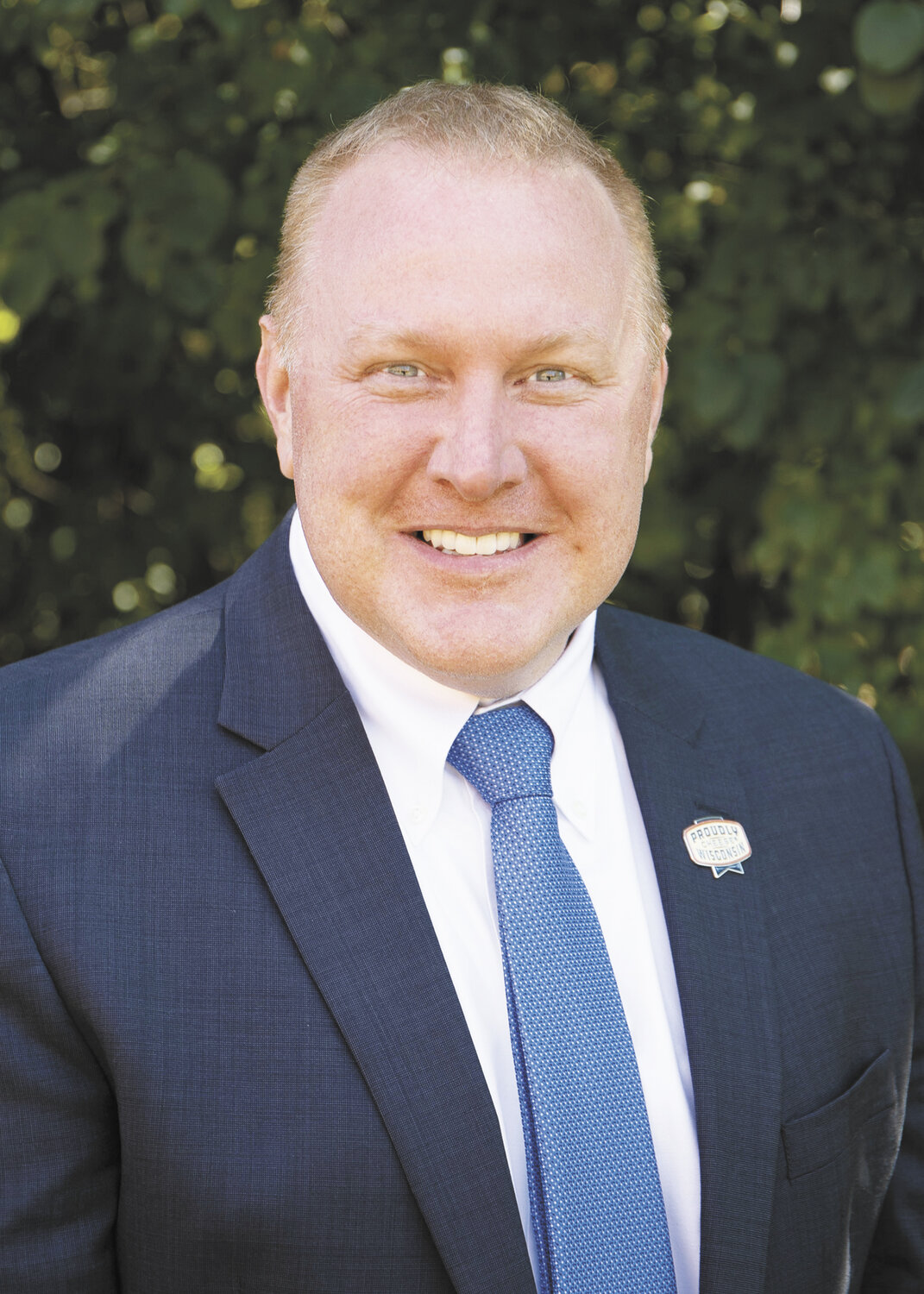
Ben Miller, senior vice president of industry relations at Dairy Farmers of Wisconsin, said farm numbers do not tell the complete story across the countryside or reflect how farm families are thinking about the next generation.
“The number of farms is only one indicator of what’s happening in the industry,” Miller said. “Farmers are aging and retiring. Families are also discussing how they can combine assets and capabilities to ensure their operation will be attractive to their children in the future. The industry is vibrant and robust here in Wisconsin.”
He said there is an increase in multiple generations working together and aligning knowledge, skills and abilities to optimize management and production while minimizing labor and other costs.
“Milking cows 365 days per year is arguably the most difficult job in the world,” Miller said. “Hopefully this collaboration will help family members want to return to the farm.”
Cow numbers in the state remain strong at 1,266,000 as of November 2024, down slightly from a year prior when they numbered 1,270,000. The average number of cows per dairy farm is 235. Total monthly milk production across the state stayed the same from November 2023 to November 2024 at 2.58 billion pounds.
In the last five years, dairy’s economic impact has risen by 16% and is now up to $52 billion in Wisconsin Miller said.
“Consumer demand is at a record high for all products,” he said. “Cheese demand, specifically specialty cheese demand, is off the charts. We also see strong market opportunities abroad.”
As of Jan. 1, the Top 10 dairy counties by farm numbers are Clark, 631; Marathon, 346; Grant, 231; Vernon, 187; Lafayette, 172; Shawano, 159; Dane, 158; Chippewa, 151; Monroe, 150; and Manitowoc, 142. Of these counties, Lafeyette lost only one farm in 2024 while Vernon lost 18.
“I think what makes our industry so strong is its diversity,” Miller said. “Small, medium and large farms — that’s what makes Wisconsin who we are.”
Miller said there is a great deal of uncertainty around policy that impacts pricing, making it difficult to know if 2025 will also be a slower year of losing farms or if the decline will accelerate again.
“Prices are only one decision point, but I wouldn’t be surprised if we stay on this trajectory again this year,” he said.
A recent survey fielded by DFW and the Wisconsin Department of Agriculture, Trade and Consumer Protection revealed that 63% of primary decision makers on the farm have a succession plan. That number is up 21% from when this same survey was done in 2020. The survey also disclosed that 61% of these primary decision makers are over the age of 49.
“For those farms where a successor has been identified and transition plans put in place, 97% of those businesses transition the farm to a family member,” Miller said. “That’s important especially as primary decision makers are aging. These are difficult conversations to have that are oftentimes put off and avoided, but they are critical to ensuring our future remains strong.”
Jeff Betley and his wife, Jena, are the third generation at Betley Family Farms near Pulaski. The Betleys milk 3,500 cows in a 50-stall rotary parlor on their farm that was started in 1944. Focused on efficiency, the Betleys doubled their herd in the last couple years with less people than when they started.
“We’re in a commodity business, so you can’t really ever stand still,” Betley said. “There aren’t many costs that go down, and you have to pay the bills. We’re not growing just to grow but rather to make sure the business remains great for the next 5-10 years until the next step comes along.”
The 3 mile road Betley’s farm sits on once had 13 active dairy farms. Today, his is the only farm that remains.
“It isn’t a sad story; that’s just how things are changing,” Betley said. “These farms were able to sell or rent the land, and there is a great deal of value in that. These families are still part of our neighborhood. Some are raising steers and working the land. It’s a great story of investing in the farm, and it’s worth a lot of money.”
There is a possible fourth generation at Betley’s farm.
“There’s interest from our kids, so we’ll see what the next five years brings,” he said. “Our state is getting more efficient, and as the industry changes, it’s going to be more viable and stronger in the next generation.”
To the south, Illinois is experiencing a similar slowdown in the loss of dairy farms. Tasha Bunting, executive director of the Illinois Milk Producers Association, said there are currently about 360 Grade A dairy farms in Illinois, down from 380 a year ago. In 2016, there were about 600 dairies in the state. Illinois lost 40% of its dairy farms in nearly a decade.
“More dairy farms were exiting five years ago,” Bunting said. “The pace has started to slow, which is good news.”
Bunting attributes the earlier decline to market dynamics and dairy farmers who were older in their careers. She said along with improved prices, Illinois dairy farms are having success with beef on dairy, which has improved their bottom line.
“This is helping keep farmers in a little longer or maybe see them through the next generation,” Bunting said.
Bunting identified two main pockets of dairy in Illinois — one in the north along the Wisconsin border and the other in the south around the St. Louis area, where milk processor Prairie Farms Dairy Inc. is headquartered.
“Prairie Farms is a draw, and the Wisconsin cheese market is a draw,” Bunting said. “The flat, black dirt in the middle of Illinois is not conducive to anything but row crops right now.”
Milk cow numbers remain relatively stable in Illinois at around 79,000, with production staying steady as well. In December 2024, statewide milk production was at 141 million pounds, down slightly from December 2023’s total of 144 million pounds. The average herd size is around 170 cows.
“Our dairy farmers are optimistic because the milk price is above where it has been for a while, and they’re hopeful that trend continues,” Bunting said. “Our partner agencies have done a lot of great work to promote and push out the product these dairy farmers make. We’re looking forward to new opportunities and working to build upon those existing relationships.”
New opportunities are popping up on the processing side with a Tillamook ice cream facility coming online in the state later this year.
“Tillamook has not been in Illinois before, so this is exciting,” Bunting said.
Furthermore, Prairie Farms Dairy is making investments in equipment and upgrades to shift its ability to make different products and distribute products to different parts of the state and country.
“We definitely don’t have as many processors as we did 15 or 20 years ago, but there is still interest and new investment coming on the dairy processor side,” Bunting said.
Bunting is hopeful farm numbers become more stable in upcoming years.
“Many factors, dynamics and support programs can influence that,” she said. “When looking at the future of our dairy industry, it’s pretty bright and hopeful here in Illinois.”
 |
 |
 |
 |
Share with others


Comments
No comments on this item Please log in to comment by clicking here