
Lameness in dairy herds continues to be an everyday challenge. A recent podcast on “Have You Herd?” (the American Association of Bovine Practitioners) featured Dr. Nigel Cook from the University of Wisconsin. While the industry has made progress in reducing the prevalence of lame cows, he stated that many herds continue to experience lameness rates of up to 22% where the cow can be detected with a noticeable limp. Many farms underestimate their rates of lameness, stating 5%, but when visually scored, rates rise to 20%.
Given these numbers, we should ask ourselves: is lameness expensive? Should we consider an intervention? It depends on the case. Researchers estimate the cost of lameness to be between $76 and $533 per case (2023 dollars). Digital dermatitis, also known as hairy heel warts, remains the largest cause of lameness and costs nearly $100 more than other causes of lameness. White line disease and sole ulcers are also common causes of lameness.
What can we be doing to improve lameness on dairy farms? Consider the following when addressing lameness.
Routine foot care. This should encompass functional hoof trimming of healthy, normal cows in addition to the trimming of lame cows. Mildly lame cows should be detected and trimmed as soon as possible, not just significantly lame cows. If mild lameness cases are not addressed, the actual hoof structure of the cow can change, sometimes irreversibly, and create greater risk of lameness cases in the future. I encourage all employees who bring cows to and from parlors to be trained in lame cow detection in addition to other herdspersons. A whiteboard can be placed in the parlor for recording lame cows. Also, have a plan to deal with lame cows on the farm quickly, rather than waiting several weeks for the next scheduled hoof trimming.
Hoof trimming frequency. This is a debated point in the industry. I work with dairies that only do one functional hoof trim around dry off while others do routine foot trims 2-3 times in the cow’s lactation. Clinically, it appears that herds that perform at least two routine foot trims per lactation have fewer cases of lameness than herds that trim only once. Swedish researchers found that cows trimmed two or three times during the first lactation were at lower odds of having claw lesions and being culled compared with cows that were not trimmed or trimmed once. When two trimmings were compared with one or no trimming, there was a lower risk of dying or being euthanized on-farm due to claw and leg disorders.
Footbathing. Just do it consistently. There is no other way to footbath effectively. What does consistency mean? Several days a week, clean and correctly mixed, changed when maximum cow passes are reached. Copper sulfate, formaldehyde, zinc sulfate and combination products are available for use. Check out automated systems that reduce labor and risk when mixing chemical products. Agrochem in particular has some nice setups and products for use.
Cow comfort considerations. There are correlations between lying time and lameness on dairies. Ideally, the cow would spend 3-3.5 hours a day out of her pen and 12-14 hours a day resting/lying. Can the cows in your herd do that? Is there sufficient lying space? Are the stalls sized for your current cow size? Even well-managed herds with 1.3-1.5 cows per stall will reduce lying time and possibly compromise production and foot health. Maximize stall comfort in all possible ways. Deep-bedded sand is a great upgrade if you are currently using mattresses or waterbeds. Deep-bedded manure solids may also be an option. If deep bedded isn’t an option, can you improve your facility in other ways? Should you update mattresses or water beds? Could you bed more heavily to improve comfort? Have you considered a bedding retainer to increase bedding depth? Check out the Dairyland Initiative website for facility and freestall design ideas.
Heifers. Virgin and pregnant heifers should not be ignored in a lameness prevention plan. In fact, I often see heifers with digital dermatitis (hairy heel warts) that bring it into herds as first-lactation animals. Regular footbathing is the best method for prevention and treatment of digital dermatitis in heifers. Some more advanced cases of digital dermatitis may need to be seen by the hoof trimmer. I would not recommend blanket trimming heifers as the only control method for digital dermatitis (but it can improve foot health of heifers in other ways). I have some herds that spray feet with a footbath product instead of foot bathing, but we still struggle to control digital dermatitis with that method when compared to foot bathing.
Consider environmental stressors. Is heat stress a problem? Even the most comfortable stall will not entice a cow to lay down enough if heat abatement is lacking.
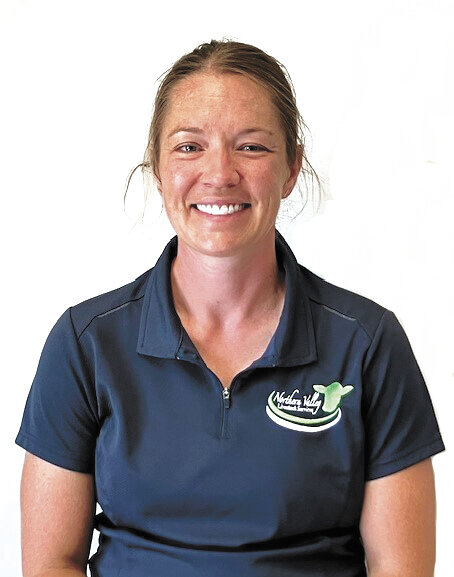
Megan Weisenbeck is one of five veterinarians at Northern Valley Livestock Services in Plainview, Minnesota. She practices primarily dairy production medicine in Minnesota and Wisconsin. Megan can be reached at meganweisenbeck.dvm@gmail.com.
 |
 |
 |
 |
Share with others


Comments
No comments on this item Please log in to comment by clicking here