
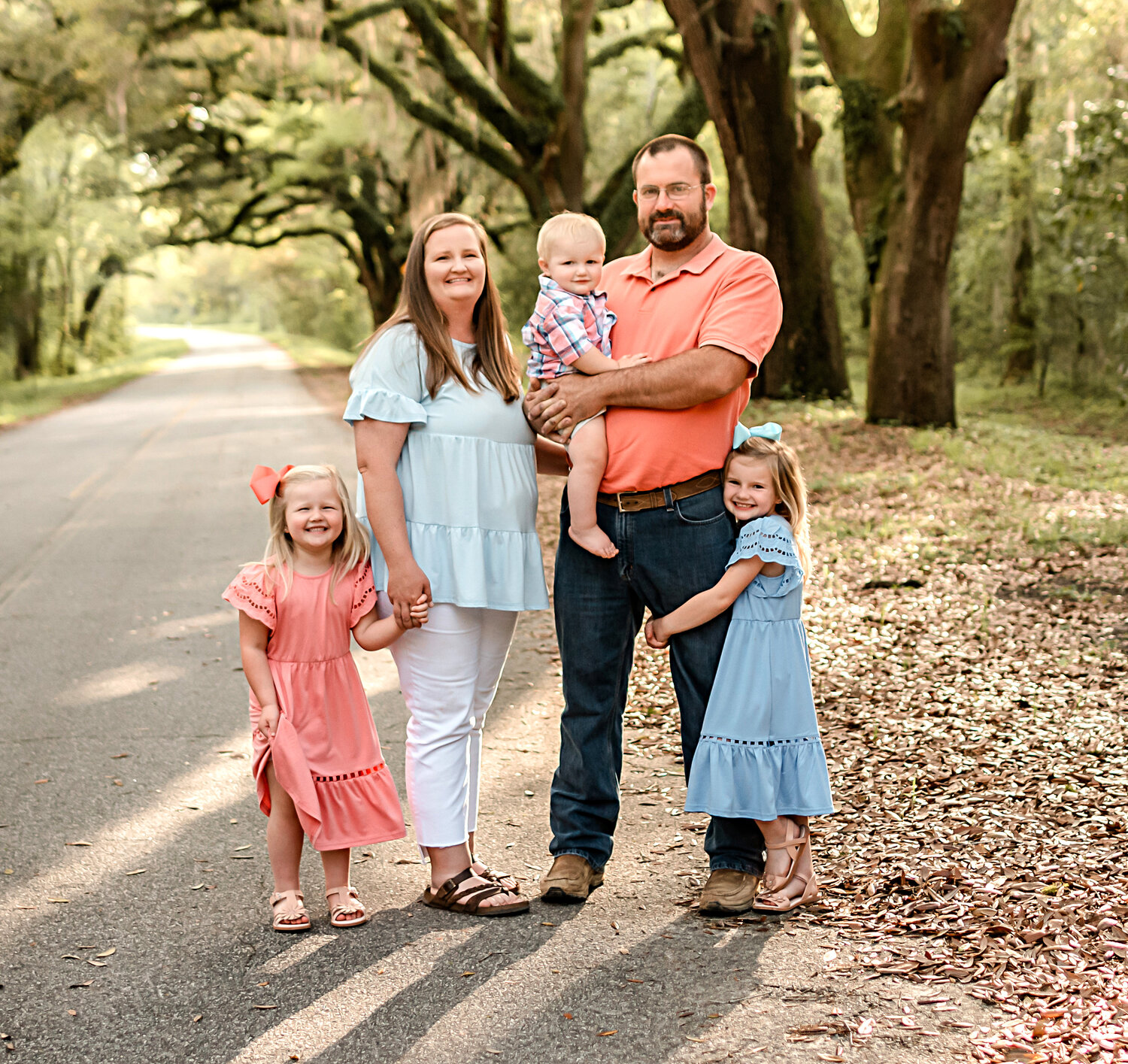


WAYNESBORO, Ga. — The past two years, Ryan and Whitney Keith have experienced many changes, from buying their own dairy to updating facilities and doubling their herd.
The Keiths milk 310 registered Brown Swiss and cross-bred cows near Waynesboro, about an hour south of Augusta. They farm 430 owned and rented acres for the dairy as well as another 280 acres seven miles from the dairy. Two hundred of these acres are used as pasture for their beef operation.
The couple is assisted by three full-time employees, two high school students and their three children ages 7 and under.
“(Farming gives) the freedom to raise your family the way you want,” Whitney Keith said.
Having their kids alongside them instead of at daycare is a luxury, Keith said. Their children help sort cattle, open gates and more.
“They are just about as handy as another full-grown adult,” Keith said. “Having the memories of them working alongside us and having that experience for them will aid them in whatever they choose to do.”
The Keiths purchased their dairy from Whitney’s parents in October 2022. Soon after, they began the expansion.
The push for expansion was two-fold. First, there was the need for cash flow. Second, expanding helped secure their future ability to dairy.
“We’ve increased probably faster than we thought we would, just to be able to keep going,” Keith said.
Though the Keiths are one of several dairies on their road, these other dairies are small, so filling milk loads was a challenge. This spurred the Keiths to increase.
“Not having full tankers, we all would have suffered,” Keith said.
About 70% of the Keiths’ milk is sold through a cooperative, the rest is sold to Whitney’s parents, who operate a processing facility called Southern Swiss Dairy LLC.
In December 2022, they retrofitted a double-8 Germania herringbone parlor into the space their former double-6 herringbone parlor held. The fit is tight, but the cows stand at a steeper angle which allows four more cows.
At about the same time, they purchased 75 cross-bred cows from a single farm about two hours away.
“We preferred that they all came from one place, so we weren’t co-mingling cows with the opportunity to spread disease,” Keith said.
In June 2023, they added an approximately 85-stall lean-to onto their freestall barn to increase their capacity to about 240 stalls. The Keiths aim to keep the barn at 20%-25% overstock for a capacity of 325.
At the same time, they bought more cows from the same farm to bring their numbers to where they are currently.
The Keiths raise their own forages and generally buy grain and concentrates. They raise predominantly corn, triticale and sorghum, plus a little hay.
Most acres are triple cropped. The Keiths plant triticale in late fall, which grows throughout the winter and is harvested in middle to late March. By April 1, their goal is to have corn planted. They chop in early July. They chase the corn with sorghum, which is chopped in November.
“We don’t have a season where nothing’s growing,” Keith said.
Their farm is located on the northernmost edge of the coastal plain with sandy loam soil and flat topography. Underneath the area is a good aquifer, and their farm also has a spring, from which they can irrigate during drought.
“We’re very blessed that we have a secure water source,” Keith said.
Much of the nearby land is planted with cotton or peanuts. Keith said their soil is ideal for cotton, so there is land competition.
Georgia winters are mild. Keith said a few days of sub-freezing weather is the coldest they get. They occasionally receive freezing rain, but rarely snow. Recently, the Keiths went to the mountains to get a Christmas tree and it was the first time their children had seen snow.
The Keiths calve year-round on pasture, but avoid calving older cows in the heat of summer. In the summer, when the heat does not abate overnight, the cows are stressed.
The Keith’s freestall barn feed rail area is equipped with fans every 25 feet and sprinklers. In the free stall area, there are fans every 50 feet. Fans and sprinklers turn on automatically when the temperature is over 65 degrees.
“You get acclimated to it, but you certainly don’t want to stress cows during those times,” she said.
The Keiths’ farm was affected by Hurricane Helene. Usually during hurricanes, Keith said they only receive wind and rain, but this time they suffered damage because the eyewall of the storm passed close to them.
The hurricane hit early Sept. 27 leaving the farm without power for 11 days. Their 60- by 80-foot heifer shed was a total loss, with its beams snapped off at the ground. Half the roof was blown off their holding pen, their commodity shed room was damaged, they had damage to their farm office and two 50-foot oak trees fell on their home’s roof.
“We were very lucky just in the fact that we had somewhere to go and that we could milk cows and not have to move animals around,” Keith said.
Though much of the herd is now crossbred, Keith grew up showing registered Brown Swiss and does flushing on some of her cows. Keith breeds the Brown Swiss for longevity, with some reaching 7-8 lactations. Her goal is to someday show with her family at World Dairy Expo.
The cows are one of the reasons Keith said she enjoys farming.
“I just enjoy having nice cattle around,” Keith said. “I recently heard somebody say that, ‘Good cows make you excited to get to the barn every day, and I hope to always have those cows around.’”
 |
 |
 |
 |
Share with others


Comments
No comments on this item Please log in to comment by clicking here