

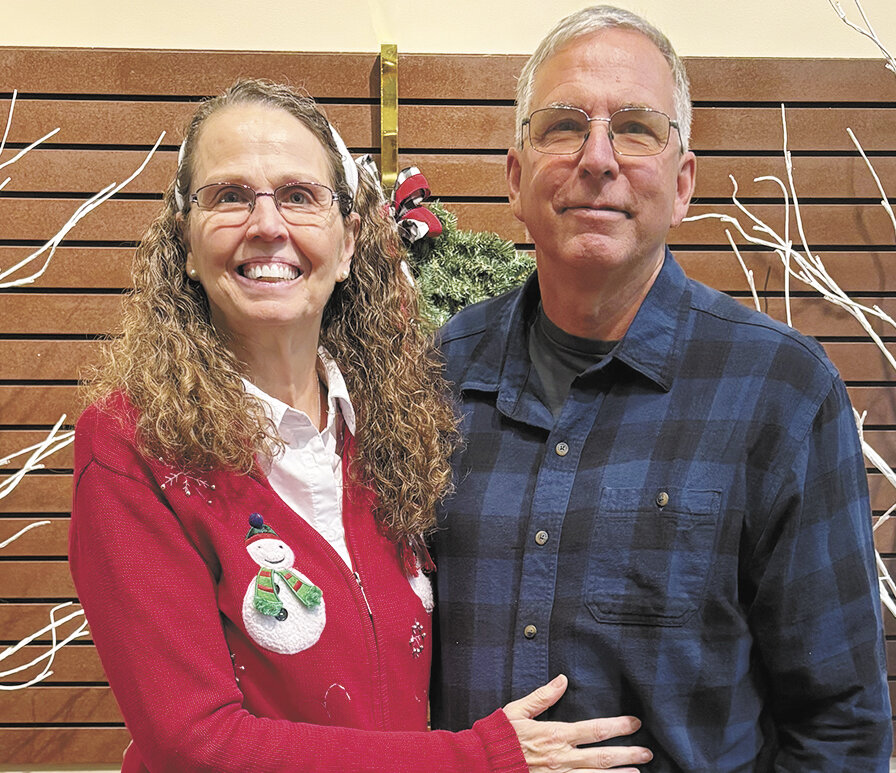




MALOLO, TABORA, Tanzania — Mark Yeazel spent more than 40 years breeding a renowned herd of registered Holsteins. A devout Christian, he has now been called to use his knowledge of dairy farming to start a dairy farm at a Tanzanian orphanage.
Yeazel and his wife, Joy, have long supported various missions, both domestic and abroad, through their church. Yeazel created Junk for Jesus, collecting scrap metal to raise money to support those missions.
In April 2023, one mission called louder to Yeazel than any had before. Yeazel decided to disperse his Ja-Bob Holsteins herd in Eaton, Ohio, to pursue the calling he felt from the Lord to help build a dairy farm on a Tanzanian orphanage in the village of Malolo, near Tabora.
“It wasn’t an easy decision,” Yeazel said. “I’d developed 11 generations of Excellent cows in the (Sky-Hi Mars) Helen family and was doing some cutting-edge things with the slick gene. I felt like it was just another year or two, and that was really going to take off. People told me I was crazy to sell the cows and build a dairy in Tanzania, but my response was it was crazier to hear the voice of God and say no.”
For nearly two decades, the Yeazels had supported a Romanian orphanage that operated a dairy farm, helping them buy cattle and equipment and importing semen for them. Through this, they came to know Mircea and Lidia Toca, who ran the orphanage and eventually became directors of Eternal Family Tanzania. That connection planted the seed for the path the Yeazels would eventually follow.
In 2019, the Yeazels had plans to travel to Kenya and realized they could also travel to visit the orphanage they were supporting in Tanzania.
“We came home from that trip feeling like we were supposed to help build a house,” Yeazel said. “We raised about $55,000 through Junk for Jesus and our church raised the other $10,000.”
Keeping in contact with EFT, Yeazel learned a tractor was needed to farm the 100 acres of land at the orphanage. Again, the Yeazels raised the money, as well as funds to pay for two wells.
Feeling drawn to make another trip to the orphanage to see the progress made, the Yeazels spent a week at EFT, where they learned about the Tanzanians’ desire to build a dairy farm in the village.
Yeazel cautioned the Tanzanians that there was a difference between starting a dairy farm and starting a successful dairy farm. On the 8,000-mile trip home, Yeazel considered what he had heard and witnessed.
“I believe I was led to do that,” Yeazel said. “I told Joy on the way home I thought we should sell the herd so I could be over there more to help build this thing right.”
The Yeazels dispersed their herd in November 2023 and headed back to Tanzania in spring 2024.
“I started telling people in May or June (of 2023) what my plans were,” Yeazel said. “I didn’t ask anybody for any money, but by the time we sold the cows, we had over $100,000 in donations. It’s amazing, I guess people were nudged by God to say, ‘Hey, we want to be a part of what you’re doing.’ That was really a confirmation for me, that I was going in the right direction.”
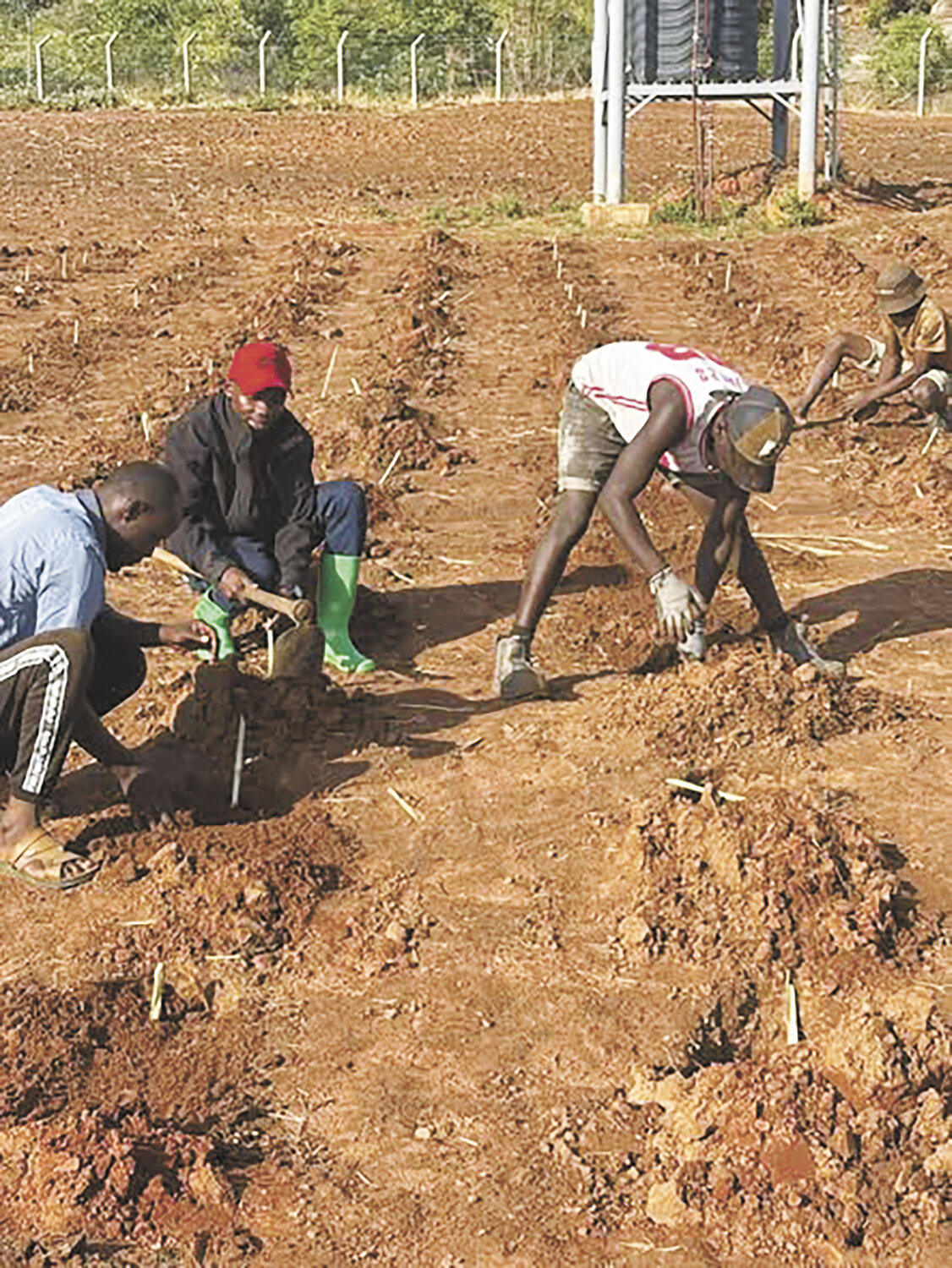
Once they returned to Tanzania, time was spent building the required infrastructure, preparing to grow the crops to feed the cows and hiring a herdsman.
“I didn’t want to just make the standard Tanzanian dairy,” Yeazel said. “I thought we could do something better, make the facility a little nicer, build a house for the herdsman. And then there is the issue of feed. That’s a mistake I’ve seen too often there — people buy cows but don’t have their feed ready.”
Located 200 miles south of the equator, Yeazel said the year is split into two seasons — the rainy season from November through April and the dry season from May through October.
Understanding the importance of an inventory of stored feed, Yeazel set about preparing to make silage, purchasing equipment in Kenya to make small round bales of silage. Silage was being made long before the first animals arrived at the farm.
This summer, six bred heifers were purchased, four of which have now calved. Yeazel said the plan is to get the farm established with 10 head milking to provide fresh milk for the village. The cows are being milked with a bucket milker and a portable vacuum pump.
“We’re making enough to supply the village, so all 150 children can get milk now,” Yeazel said. “This week we had extra and sold 280 liters in the marketplace. That was the plan all along — to make enough for the children and sell the surplus.”
Sourcing dairy cattle in Tanzania is challenging, Yeazel said, as often breeding information is inaccurate. Most of the cattle in Tanzania are Bos indicus animals, such as Ankole-Watusi.
“I’m pretty sure the ones we bought are bred up from those; they’ve got the narrow rear ends and poor rear legs,” Yeazel said. “We were told they were bred to Fleckvieh but the calves are obviously Holstein.”
The dairy industry is small in Tanzania. Yeazel said the average herd size is typically only a couple of cows. In the southern part of Tanzania there are seven large dairies, ranging from 50-1,300 cows. Those dairies have been built by South Africans with oil money, Yeazel said.
Yeazel has purchased another group of animals from Kenya, but they have not been delivered to the farm yet. The region is facing a season of political unrest, Yeazel said, making it risky to move cattle a long distance. While the Tanzanian government is described as a democracy, around the election, one opposing candidate went into exile, while the other was jailed. Election day protests led to people being killed, with the United Nations reporting that at least 700 were killed and that there are “other estimates pointing to thousands of potential victims.”
Along with the political unrest, limiting socioeconomic factors plague the people of Tanzania, Yeazel said.
“Most homes do not have electricity,” Yeazel said. “I have been told one-third of the people have running water in their homes; another third have access to clean water — there are pumps around town where you can go pump yourself a bucket of water and carry it to your house; another third of the people do not have access to clean water — they’re going to a pond or dipping it out of a stream.”
That lack of infrastructure makes dairy consumption problematic, Yeazel said. Much of the milk consumed in Tanzania is called mtindi, which Yeazel describes as sour milk with curds in it, that will keep for several days without refrigeration.
“They don’t seem as concerned about getting the milk cooled,” Yeazel said. “They typically receive milk warm — you’ll see someone traveling over 15 miles on a motorcycle, with milk in a 5-gallon bucket, selling bottles of milk on the corner. It’s part of the culture here; everybody is doing something to get by. They have to because the government is not going to do it for them.”
Yeazel hopes to be able to build a small building and place a milk cooler in, to better utilize the milk produced at the dairy.
While the path he has taken would not be considered conventional by most, Yeazel said he knows it was the right one.
“When God calls you, you’re equipped and it stretches your faith to do things you didn’t think you would ever do,” Yeazel said. “There’s a lot of reward in that. I went there to build a dairy and people now ask me what I’ll do after that. I don’t really know, because God hasn’t told me yet. It’s good not to know, because then you are focused on today, rather than looking too far down the road.”
 |
 |
 |
 |
Share with others


Comments
No comments on this item Please log in to comment by clicking here