
When we were in the middle of full-time dairying and raising our children, exploring new hobbies was always pushed to when we retired. Guess what? We’ve retired from milking, and the children are grown; now what? You never know when or how a seed is planted that leads to new adventures or a new hobby.
When we were first married, Mark asked where my sewing machine was. My what? I didn’t have a sewing machine. I didn’t sew. My mother didn’t sew. Her mother didn’t sew. My great-grandmother (Grandma’s mother-in-law) was the seamstress. Only she could sew good enough for her only son, my grandfather. So, sewing was not a family tradition passed down through the generations, but it was a gene in our DNA.
I remember only sewing two projects growing up. I learned how to sew in seventh-grade home economics class; I made a patchwork seat cover for the heat register in my bedroom. An 1870s house has a very limited version of heat actually reaching the upstairs. The water-heated register was only good as a bench by the time I was living in this room. I also made a blue-ribbon seersucker bib-dress for my only 4-H sewing project. I learned I could sew, but I wanted to be outside, farming with my dad. My sister was the real seamstress in our generation. I was OK finding different projects.
Mark was concerned about how I was ever going to mend his farm clothes if I didn’t have a sewing machine. I had never given it any thought. I figured his mother would want to continue the job for her baby boy as my great-grandmother did. That was not his plan. So, I went to town and bought a 1970s Singer sewing machine, the exact same model I had learned on in junior high school. I guess I was going to be in charge of mending Mark’s farm clothes.
Thankfully, mending farm clothes does not require finesse and careful construction. As long as the hole was closed and fabric reinforced, the job was done. Zigzag was my favorite reinforcement stitch. I eventually learned the best mending trick was a trip to Saver’s or Goodwill to buy farm jeans. Over the years, I did sew a few Halloween costumes, outfits for the kids and blankets. It still wasn’t my favorite thing to do, but I could still whip something up.
Over the past 10 years, I have expanded my repertoire of sewing projects to include quilt tops. Nothing real special. I’m self taught and not really confident in my skills, but it is kind of interesting to watch patterns come to life. Well, Sherry has been after me for years to join her and Donna at a weekend quilting retreat in Stewartville. My schedule with daily chores “prevented” me from joining them, but with that obstacle removed, I could join them. Oh boy, a first step.
I didn’t realize how much fun it could be to just focus on sewing. No meals to plan, prep or make. No TV. No distractions. No interruptions for “five minutes.” Yes, I was the newbie in this group, which has been sewing together for over 30 years, but I “seamed” to find my place at home with these amazing women. I could pick their brains for a project I have in my head with no clear pattern or direction. I was able to complete a couple of projects and recharge to start new ones once I got home.
Once I got home, I was able to put my quilting skills to use outside with Mark. Using a 2- by 8-inch by 16-foot plank as our straight edge, we cut 73-inch strips of black landscape fabric WOF (width of fabric, a quilting direction). Unfortunately, we didn’t square up the fabric with our first cut, so by the sixth one, we were a bit wonky but still usable. Mark wanted to surround the new shop with landscape fabric to prevent weeds from growing and sand from splashing up on the sides as rain fell from the roof.
It was like piecing a quilt top together. We folded the strips over to create a double barrier, punching landscape staples to hold the fabric in place up against the shop foundation. Then, Mark used hog barn slats as weighted sashing strips to hold the other side of the fabric in place. Between the slats and the foundation, Mark arranged river rocks in the open space. We’re still shaking our heads at the thought of actually paying for rocks to be delivered to the farm. It was such a strange sound, hearing rocks sliding off the dump truck onto a slab of concrete in the lot. Mark’s vision for this project was just right.
Between my quilting retreat and Mark’s landscaping project, deer hunting season opened. Deer have been Mark’s other livestock venture. All summer, the deer have been harvesting from our corn and alfalfa fields. It was time for Mark to make a harvest of his own. He would make his way to the “perfect” deer stand, only to be in the wrong spot when the deer appeared. He was seeing deer but nothing close enough to shoot at — or sometimes too close.
Mark was concerned about the grain dryer running all night. He knew he wouldn’t sleep very well unless he went to check on the drying bin. As the 10 o’clock news was starting, he slipped on his shoes to pop up to Al’s place to check on the bin. When he started to drive out of our yard, he noticed some dark creatures up ahead. Three does were grazing and relaxing by our mailbox. It was as if they were teasing him. As he drove closer, they hopped across the road into Popp’s field and took a final look behind them before they scampered out of the headlight beam.
A couple of nights later, gunshots could be heard ringing in the neighborhood. Mark was able to take down an 8-point buck. He is so excited to have venison in the freezer and a new rack to display. I’m thinking the rack is going to find a home in the shop office to keep him company while he discovers new and different projects to work on in retirement.
With Mark’s eye for color, his love of straight lines and painting has me thinking he may be on track to discovering a new hobby we can do together yet in our own spaces. Barn quilts are a combination of precision paint lines, geometric designs and quilting patterns. Now, if I can just find a barn quilting retreat nearby to pick up some tricks, we could both be creating quilts.
They say you should retire to something and not from something, but you’ve sometimes been working your way toward your future plans without even realizing it, through all the little things you do and the experience over the years. The hardest step is the first. Take it. You may be surprised at what you discover along the way.
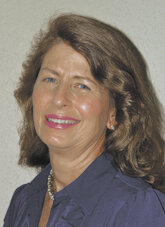
As their four children pursue dairy careers off the family farm, Natalie and Mark Schmitt are exploring new adventures on the farm outside of the milking barn at their farm north of Rice, Minnesota.
 |
 |
 |
 |
Share with others


Comments
No comments on this item Please log in to comment by clicking here