
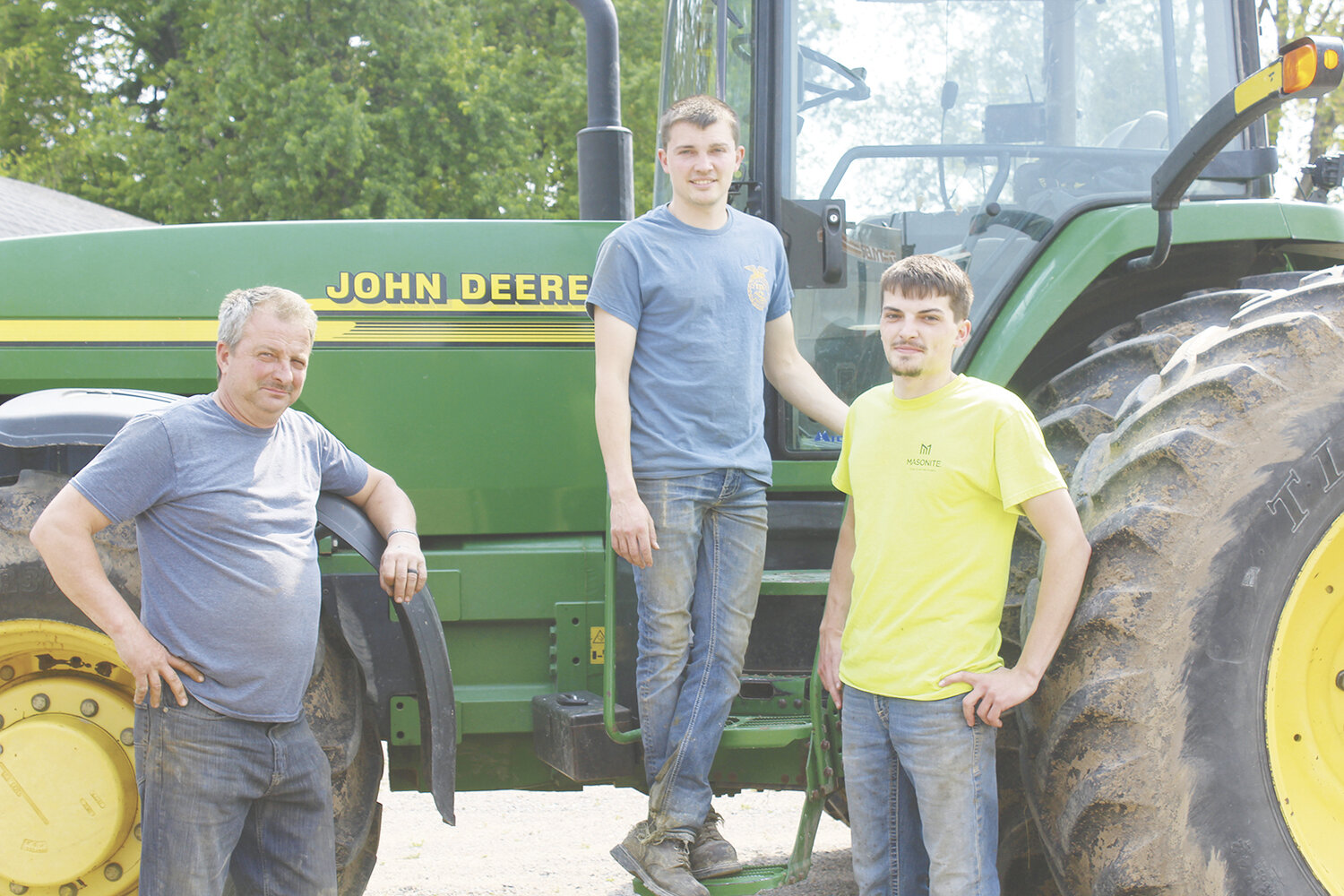


ARPIN, Wis. — For as long as he can remember, Brad Dorshorst knew he wanted to dairy farm. A vacant barn next door to his parents’ Wood County farm provided the perfect place for him to begin to pursue that career.
Brad started milking cows on his own during his junior year of high school. Ten years later, he’s milking nearly 100 cows on his own, as well as working with his parents, Dan and Cindy, and brother, Austin, on the home farm where they milk 150 cows. The Dorshorsts work together to raise crops and heifers. Brad ships his milk to Mullins Cheese.
Brad’s herd consists primarily of Holstein cows, and he said he has a soft spot for the Red & White variety.
“My dad has always had Red & Whites, so it’s what I grew up with,” Brad said. “Dad invested in developing polled genetics, too. I put emphasis on selecting polled bulls.”
Brad feeds grain and protein before milking and haylage and silage after. He tries to ensure his cows spend time on pasture each day.
“Dad and I both still component feed,” Brad said. “We’ve talked about getting a mixer, but we haven’t made the decision to do it yet.”
The morning of June 2, the sun shone and the Dorshorsts were on a mission to get the rest of their corn planted.
“We’ve still got about 105 acres of corn left to plant,” Brad said. “Hopefully we can get it all done today. We had to quit for a while when we got a bunch of rain and cool temperatures mid-May.”
Together the Dorshorsts farm about 1,200 acres, raising feed for the two herds and doing some cash-cropping and hay sales as yields allow.
“We’d hoped to be doing our first crop this week, but now they’re talking rain again,” Brad said. “Just before Memorial Day, they were talking about the week being dry, and then by Tuesday, they had chances of rain pretty much every day last week.”
After barn chores were wrapped up, the cows fed and turned out, Dan and Brad set about readying for the day’s work. Brad operated the soil finisher while Austin finished up discing and Dan followed with the planter.
The Dorshorsts are concerned with rising costs for inputs, like seed corn, and ever-shrinking margins.
“People don’t realize how much money is sitting on this pallet,” Dan said. “It takes a lot of bags to fill the planter up, to raise the crops we need.”
The Dorshorsts said the cold, wet weather in mid-May had them concerned about a repeat of last year’s cropping season.
“I’m hoping for a good year this year,” Dan said. “Last year wasn’t a very good year. We didn’t get everything planted and what we did, didn’t do that well. They say it was one of the wettest years a lot of people could remember. We had to put in some alternative crops, like peas and oats, just to have something to put in the silo. At least the corn we have planted is all coming up, so that makes me feel better.”
Brad agreed.
“Last year was just one thing after another,” he said. “When you’re planting corn in July and you’re not even halfway done, it really makes for a long, stressful year.”
Once they get their first crop going, Dan said they might have some additional ground to put in corn.
“Some of the hay fields look pretty tough after the winter we had,” he said. “We might have to go ahead and work up some of the poorer fields.”
As the day progressed, each of the Dorshorsts logged windshield time in their respective tractors, finishing field preparations and planting.
“After last year, it’s a pretty good feeling when we’re moving to the last field to plant and it’s only June 2,” Brad said. “It’ll be a relief to know we have everything in the ground. Now we just wait for it to grow.”
 |
 |
 |
 |
Share with others


Comments
No comments on this item Please log in to comment by clicking here